
Part 1: Why it matters and what the standard asks
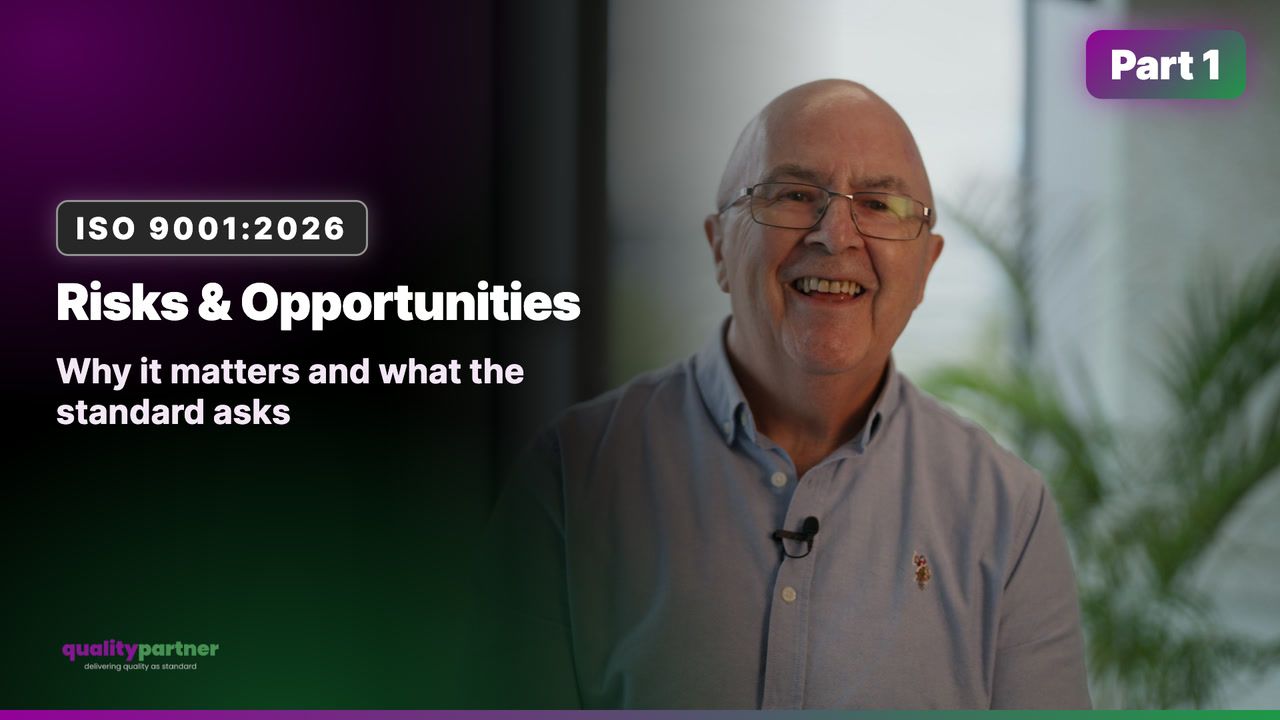
About this lesson
Paul explains why risk-based thinking has to be led by top management rather than handed to a quality manager to fill in a matrix. He frames good risk and opportunity management in three ways: assurance (fewer disruptions to delivery), compliance (risk-based thinking runs through ISO 9001 from section 4 to section 10) and advantage (a clear process for new markets, products and stronger customer relationships).
He then sets out what the standard requires: understand the context of the organisation and the needs of interested parties, determine the risks and opportunities to address, plan actions, integrate them into QMS processes and evaluate their effectiveness in proportion to their impact on product and service conformity.
In this part
- Why top management must lead on risk and opportunity
- Assurance, compliance and advantage
- The inputs to review: strategy, markets, legal and regulatory change, technology, skills, culture, supply chain
- Interested parties: customers, regulators, certification bodies, employees, suppliers, owners and communities